Don't wait! Join our UPSC Prelims Test Series from 17 November and stay ahead of the competition.

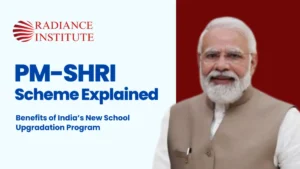
PM-SHRI Scheme Explained: Objectives, Features & Benefits of India’s New School Upgradation Program

PM-SHRI Scheme Explained: Objectives, Features & Benefits of India’s New School Upgradation Program

Education in India is transforming — and one major player behind this shift is the PM-SHRI Scheme. Launched in 2022, this ambitious initiative by the Government of India is designed to upgrade over 14,500 existing schools into model institutions that truly bring the National Education Policy (NEP) 2020 to life. But what exactly is it all about? How does it work? And why are some states not on board yet? Let’s break it down together in a simple and relatable way.

What is the PM-SHRI Scheme and Why Was It Launched?

Let’s start with the basics. The PM-SHRI Scheme, short for Pradhan Mantri Schools for Rising India, is a centrally sponsored school upgradation scheme. It’s not about building brand new schools from scratch but about transforming the existing ones into model schools in India that set a benchmark for quality, inclusivity, and modern learning.

This program directly supports the NEP 2020 implementation, which aims to shift education from rote memorization to critical thinking, creativity, and practical understanding. Essentially, the PM-SHRI Scheme is the government’s way of saying — let’s show what real education reform in India looks like, not just talk about it.

The Core Objectives Behind the PM-SHRI Scheme

At its heart, the scheme has a few crystal-clear goals:

  • To upgrade 14,500 schools run by the Centre, States, or local bodies.
  • To make them model demonstration schools, serving as “lighthouse institutions” for others.
  • To integrate digital, green, and inclusive practices in daily learning.
  • And of course, to ensure that students receive an education aligned with the NEP 2020 vision.

Think of it as India’s blueprint for the “schools of tomorrow” — modern, holistic, and student-centric.

Key Features of the PM-SHRI Scheme

Now here’s where it gets interesting. The PM-SHRI Scheme isn’t just about repainting classrooms or adding smart boards. It’s a complete overhaul of how schools function.

Infrastructure Upgradation

  • Smart classrooms with digital learning tools.
  • Well-equipped computer labs, science labs, and even Atal Tinkering Labs for innovation.
  • Safe and sustainable infrastructure that’s child-friendly.

Green and Sustainable Schools

  • Focus on solar energy, rainwater harvesting, and waste recycling.
  • Encouraging eco-conscious habits among students.
  • Turning campuses into green learning spaces.

Pedagogical Reform

  • Promoting competency-based learning — no more rote memorization!
  • Focus on experiential, inquiry-driven teaching methods.
  • Integration of vocational and life skills.

 Inclusive Education

  • Multilingual classrooms that respect regional diversity.
  • Equal opportunities for all — especially for children from disadvantaged groups.
  • Emphasis on emotional well-being and life skills, not just academic scores.

This mix of ideas aims to redefine what quality education means in 21st-century India.

How is the PM-SHRI Scheme Funded?

Let’s talk money for a second. The PM-SHRI funding model follows a Centre-State sharing pattern, which varies depending on the region:

Category

Centre : State / UT Funding Ratio

General States / UTs with Legislature

60:40

NE & Himalayan States, J&K

90:10

UTs without Legislature

100% Central Funding

Basically, states and the Centre share costs, but the Central Government shoulders a bigger chunk for hilly and northeastern regions. After 2027, though, the maintenance of PM SHRI schools will be the responsibility of respective states or UTs.

This funding pattern ensures flexibility but also demands accountability — a balance that’s not always easy to achieve.

How Are Schools Selected Under the PM-SHRI Scheme?

Selection happens through a three-stage process.
And no, it’s not random — it’s data-driven and transparent.

  1. MoU Signing: States or UTs must first sign a memorandum with the Centre agreeing to follow NEP 2020 implementation norms.
  2. Screening: The schools are shortlisted using UDISE+ data, which tracks infrastructure, learning outcomes, and teacher performance.
  3. Challenge Mode: A competitive evaluation where shortlisted schools are field-verified by experts before final selection.

This ensures only schools genuinely ready for transformation are included.

Monitoring and Evaluation Framework

To make sure everything runs smoothly, the scheme is monitored using the School Quality Assessment Framework (SQAF) — developed by NCERT.

It involves:

  • Regular academic audits.
  • Teacher performance evaluation to identify training needs.
  • Continuous improvement plans to ensure learning outcomes stay on track.

So basically, it’s not just “upgrade and forget.” It’s a system of constant quality checks, keeping schools accountable and progressive.

The Challenges and Current Issues

No government initiative comes without a few hiccups, and the PM-SHRI Scheme is no exception.
Several opposition-ruled states like Punjab, and West Bengal have refused to sign the MoU, citing central overreach. They believe education is a state subject and such schemes reduce local autonomy.

Meanwhile, Kerala and Tamil Nadu have shown conditional willingness but asked for more financial flexibility and independence.

This friction has led to withholding of Samagra Shiksha Abhiyan (SSA) funds in some cases, which unfortunately affected running education projects in those states. Politics, as always, complicates good intentions.

Why the PM-SHRI Scheme Matters

Despite the debates, one thing is clear — the PM-SHRI Scheme could be a game-changer for education reform in India.

Here’s why it matters:

  • It acts as a demonstration model for how NEP 2020 can be practically implemented.
  • It focuses on bridging learning gaps and making education accessible to all.
  • By targeting schools in socio-economically weaker areas, it promotes equity and inclusion.
  • The push for green and digital learning ensures sustainability and future-readiness.

In short, it’s about quality over quantity — nurturing well-rounded students ready for the real world.

Other Key Education Schemes Related to PM-SHRI

To understand where PM-SHRI fits in, it helps to look at other major schemes:

Scheme

Focus Area

NEP 2020

Holistic learning, new structure (5+3+3+4), skill integration.

Samagra Shiksha Abhiyan (SSA)

Universal and equitable school education from pre-primary to Class XII.

Mid-Day Meal / PM POSHAN

Nutrition and attendance improvement.

Beti Bachao Beti Padhao

Promoting girls’ education and gender parity.

PM e-Vidya & SWAYAM

Digital learning and online courses for students and teachers.

Together, these initiatives form the backbone of India’s ongoing school upgradation scheme ecosystem.

The Way Forward

To make the PM-SHRI Scheme truly successful, a few things need attention:

  • Stronger cooperation between Centre and States (cooperative federalism is key).
  • More autonomy and flexibility for local authorities.
  • Focus on teacher training — because reforms fail if teachers aren’t equipped.
  • Encourage Public-Private Partnerships (PPP) and CSR funding for better reach.
  • And yes, regular data-based evaluations to keep things transparent.

Ultimately, the success of the scheme depends on collaboration, not control.

Why the PM-SHRI Scheme is in the News

Recently, the Kerala government sought financial aid under the PM-SHRI Scheme to address a funding crunch in its education sector.
At the same time, the Centre has withheld SSA funds from non-participating states like Delhi, Punjab, and West Bengal — reigniting debates about centralization and state autonomy.

So, while the intent is good, the politics surrounding it continues to evolve.

Conclusion

When you look at the bigger picture, the PM-SHRI Scheme isn’t just another government project — it’s a vision for India’s educational future. It represents what modern, sustainable, and inclusive learning should look like.

However, the journey ahead depends on how well Centre and States cooperate. Balancing reform with regional needs is the only way to ensure every child benefits equally from this bold step.

At Radiance Institute, we believe understanding such government initiatives is crucial — not just for exam preparation but for becoming informed citizens. If you’re preparing for UPSC, State PSCs, or any education-related exams, knowing the PM-SHRI Scheme inside-out can definitely give you an edge.

Also Read- Presidential Reference in India: Meaning, Process, and Key Cases Explained


Contact Us